

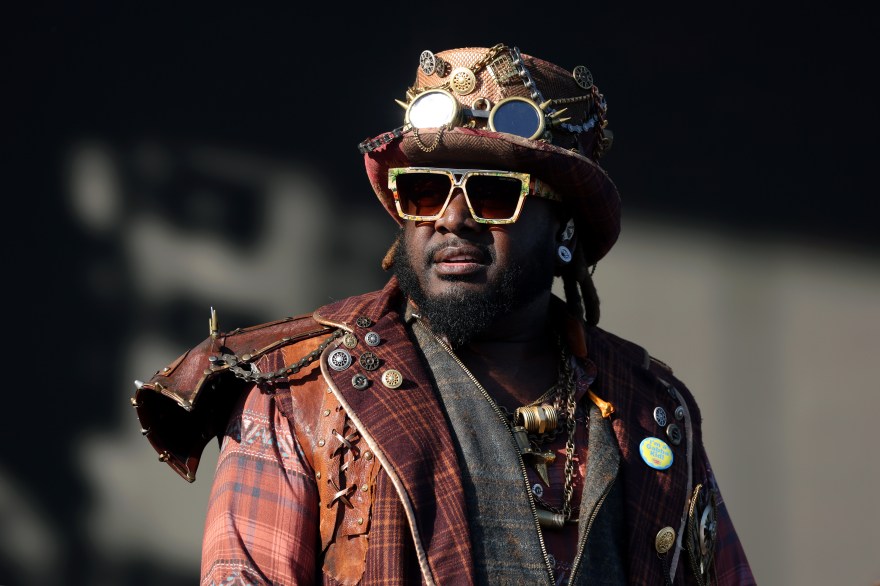
T-Pain recently revealed how he flipped decades of chart-topping hits into a $100 million catalog deal that he says set his family up for generations to come.
Videos by According2HipHop
In a candid conversation on Club Shay Shay, the Grammy-winning innovator broke down how selling his catalog to HarbourView Equity Partners became one of the most transformative decisions of his life.
“The amount of money that they gave me for my catalog— it literally would have taken me a hundred years to make that money,” he told Shannon Sharpe. “They said, ‘Here’s a hundred years’ worth of your earnings, right now.’ I didn’t think that was a hard calculation.”
That calculation carried an emotional weight, too. T-Pain recalled the moment he pulled his wife aside to share the news that would redefine their family’s future.
“I closed the door and said, ‘We rich. We rich. We got $100 million.’”
But for the Tallahassee native, the deal was more than a historic payout. It marked the beginning of a partnership extending far beyond his early-2000s hits.
“They said, ‘If you make another hit, we want that too. If you score a movie, we want that too. If you launch a football league, we want that too,’” he said. “So it’s a partnership now.”
With the new capital, T-Pain has been expanding his business empire. He purchased a 50,000-square-foot warehouse in Tallahassee to house the growing Nappy Boy ecosystem, from entertainment and gaming to beverages, and even added a plane to the fleet of life upgrades.
The rappa ternt sanga ternt entraprena had his fair share of bumps in the road before he could get to this point of business-savvy. In the same interview, T-Pain reflected on the complicated publishing situation behind his 2007 No. 1 smash “Buy U A Drank,” which interpolated lyrics from Lil Scrappy and Lil Jon.
What he intended as homage triggered publishing and master claims from their teams.
“I thought I was paying respect—and the people that could take advantage of it, took advantage of it,” he said. He emphasized he doesn’t blame the artists themselves. “Lil Jon probably still don’t know that we went through that whole thing.”
Even so, the situation didn’t dim the shine. While others collected pennies from the song’s backend, T-Pain was earning six figures a night performing it.
“Be greedy,” he said with a shrug. “But you’re not going to get what I’m doing.”
Today, T-Pain stands in a rare space—a legacy artist who managed to convert creative brilliance into long-term wealth while still pushing his artistry forward. And in true T-Pain fashion, he’s doing it with humor, humility, and an unwavering belief that his next chapter might be even bigger than the first.